
Your shingles are not worn out. They are dried out — and that is fixable.
A soy-based treatment puts the light fraction back into asphalt shingles and restores flexibility. It works on roofs roughly six to seventeen years old. We tell you in writing when yours is past that, and on plenty of roofs that is the answer.
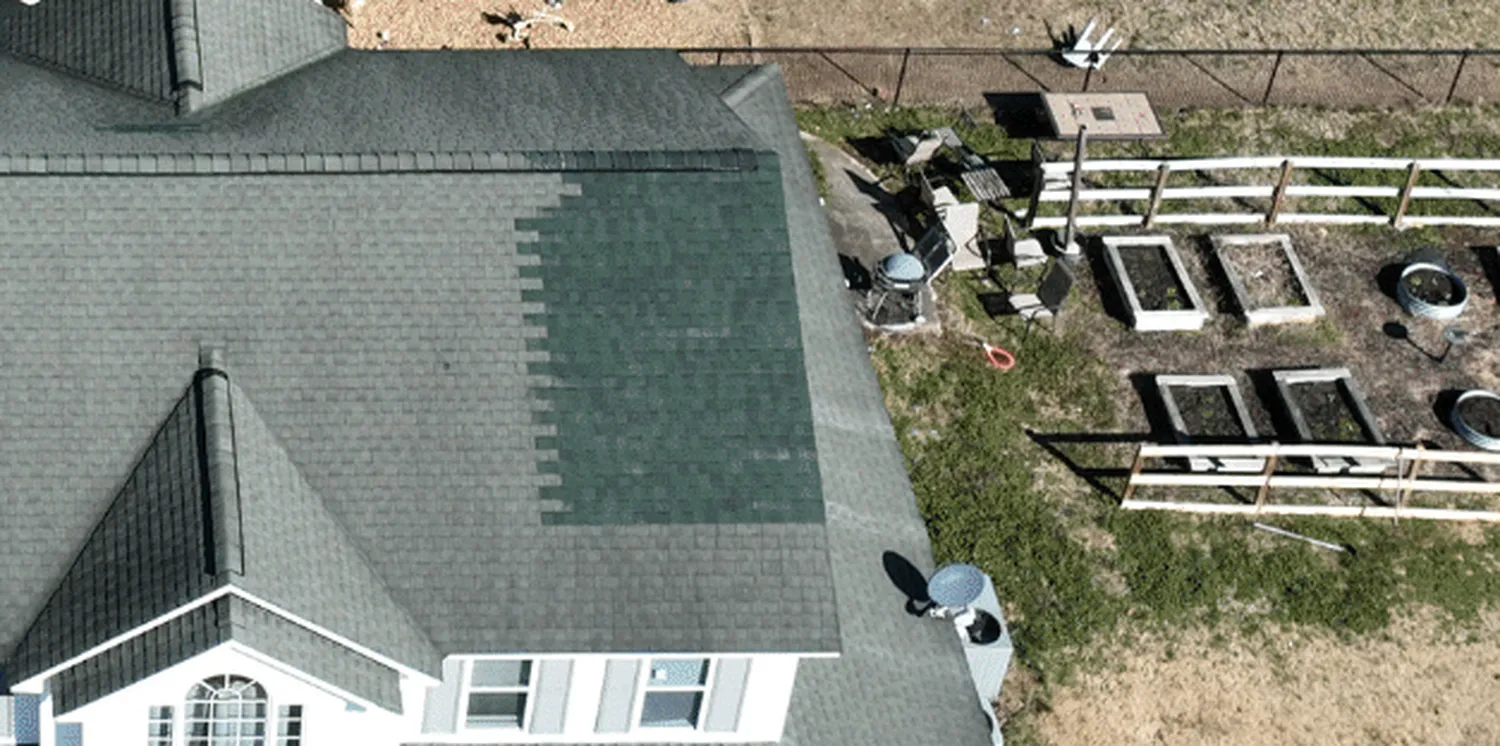
Asphalt composite shingle — the only roof covering we work on. The color difference between these planes is what a dried-out binder looks like from above.
The sixty-second version
Everything on this site, in one minute.
What a dried-out shingle actually looks like
The difference is the surface, and you can see it from a ladder.
Asphalt shingles do not fail because they get old. They fail because the light oils in the asphalt bake off, the mat goes brittle, and the granules stop holding on to it. Here is each end of that.
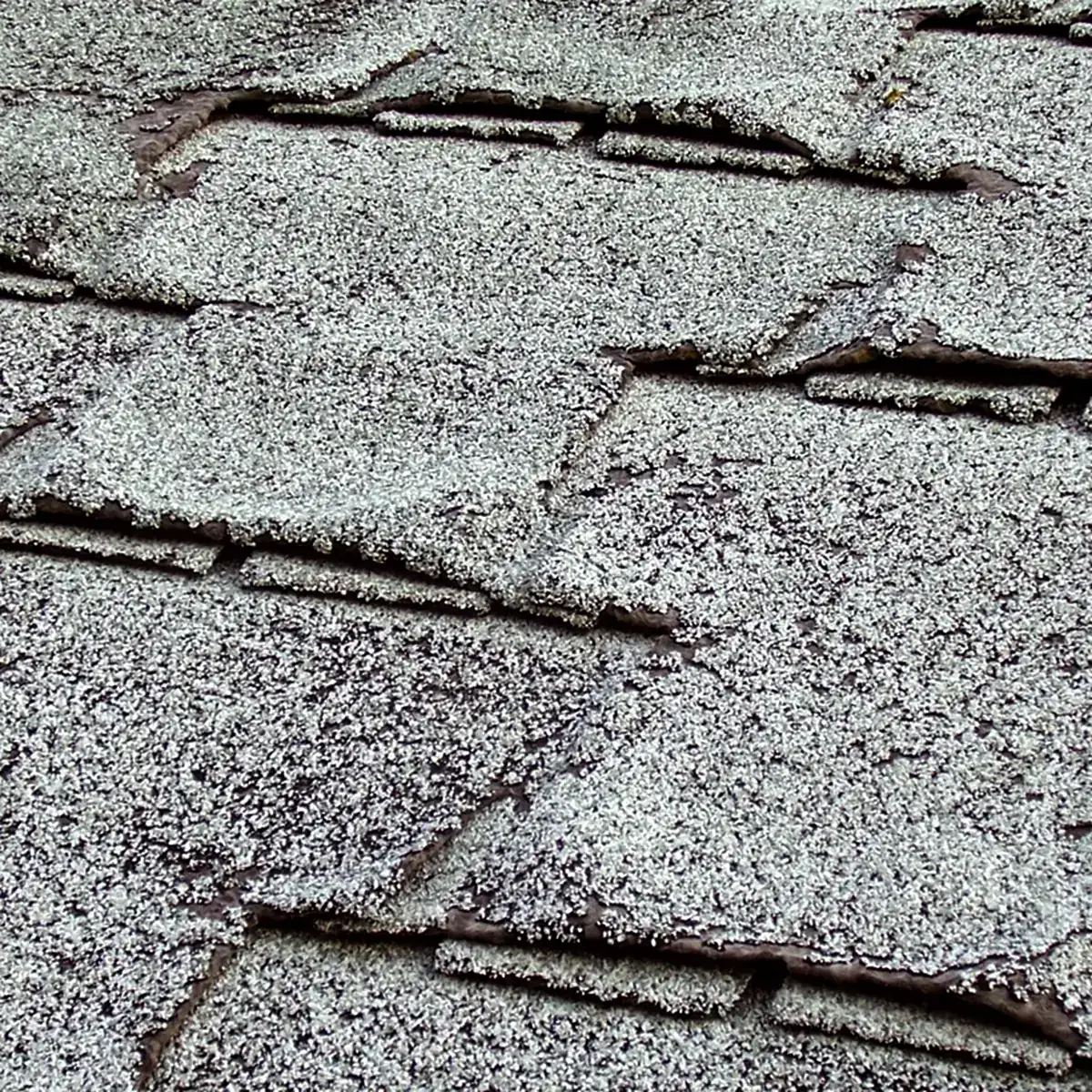
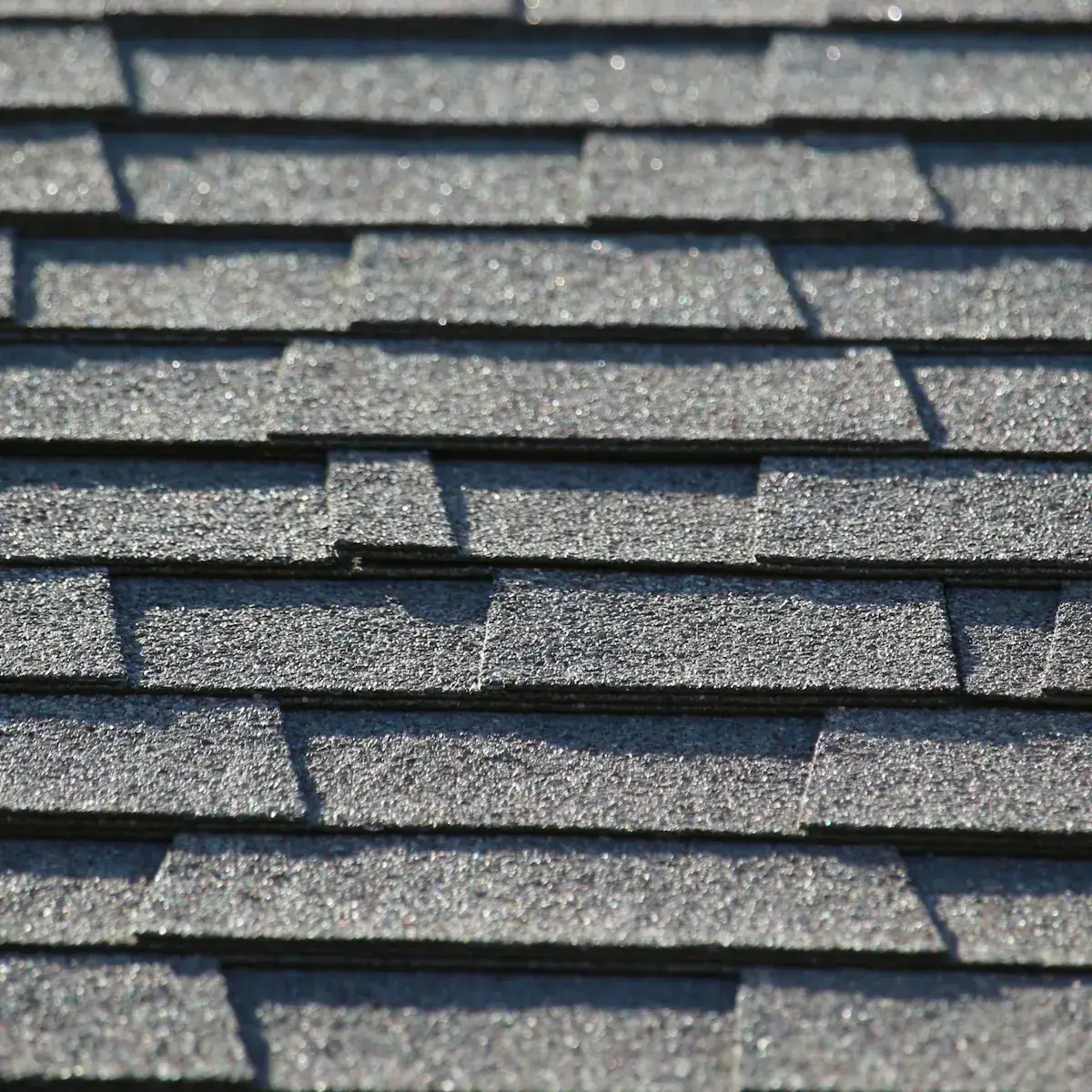
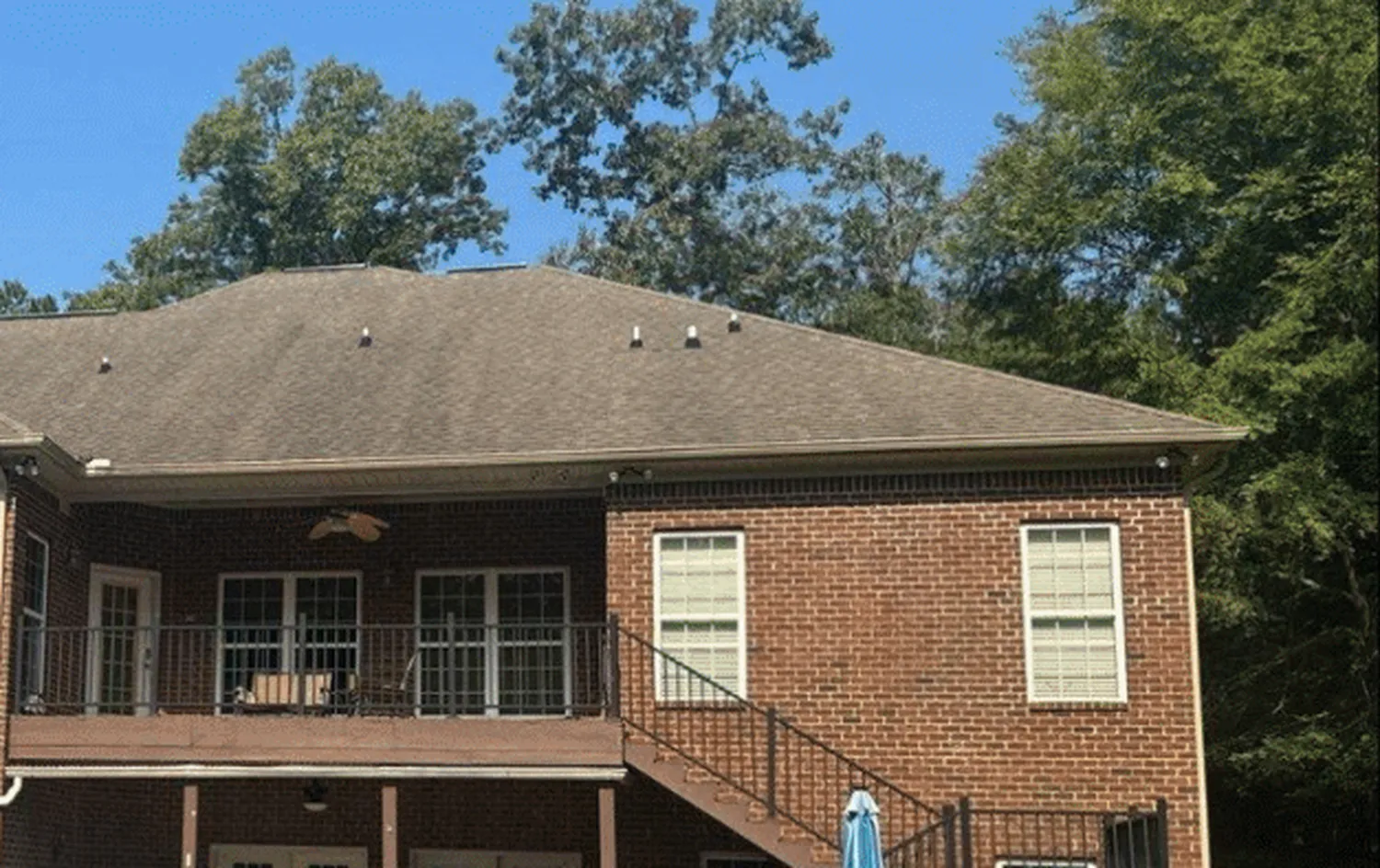
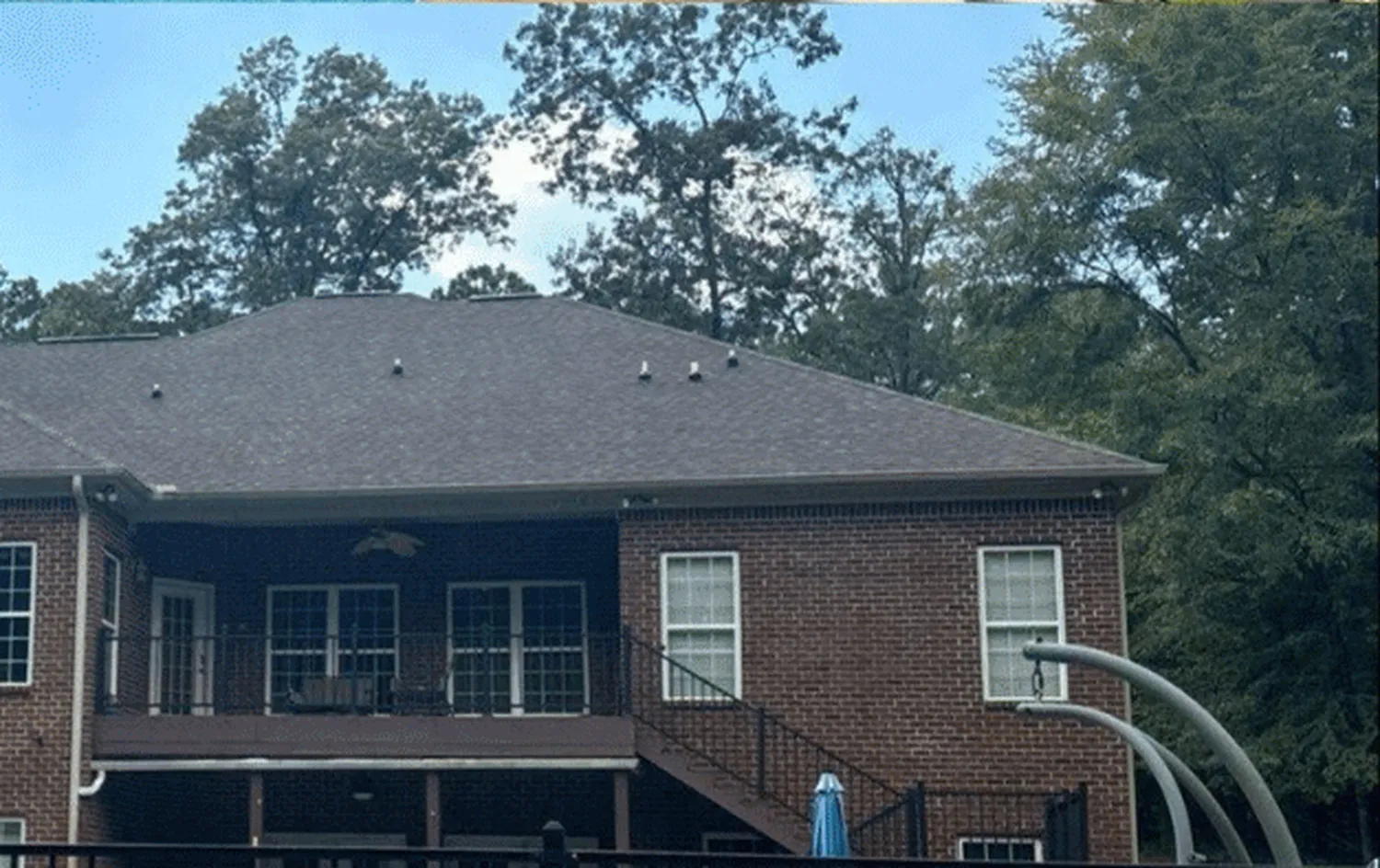
Straight about these two photographs: they are two different roofs, not one roof before and after. We are showing you the two ends of the condition scale so you know which one you are looking at when you stand in your own driveway. For same-roof, same-camera before and after on actual completed jobs, go to Before & after.
Real roofs — documented jobs from our manufacturer
Tap any photograph to switch between before and after.
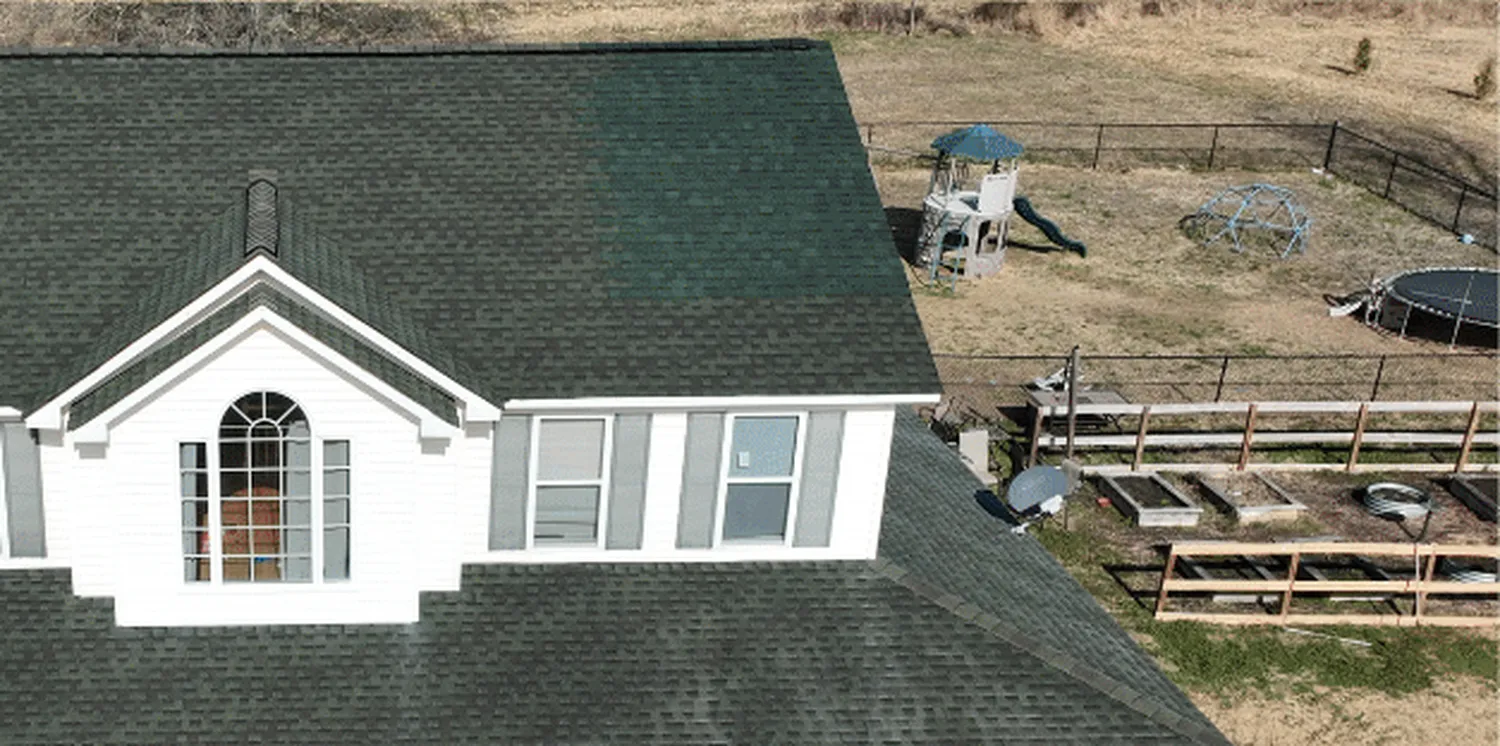
These are Roofshield's own completed jobs, supplied by the company whose product we apply. Same house, same roof, photographed before treatment and again after. Nothing here is a stock photograph and nothing here is a simulation.
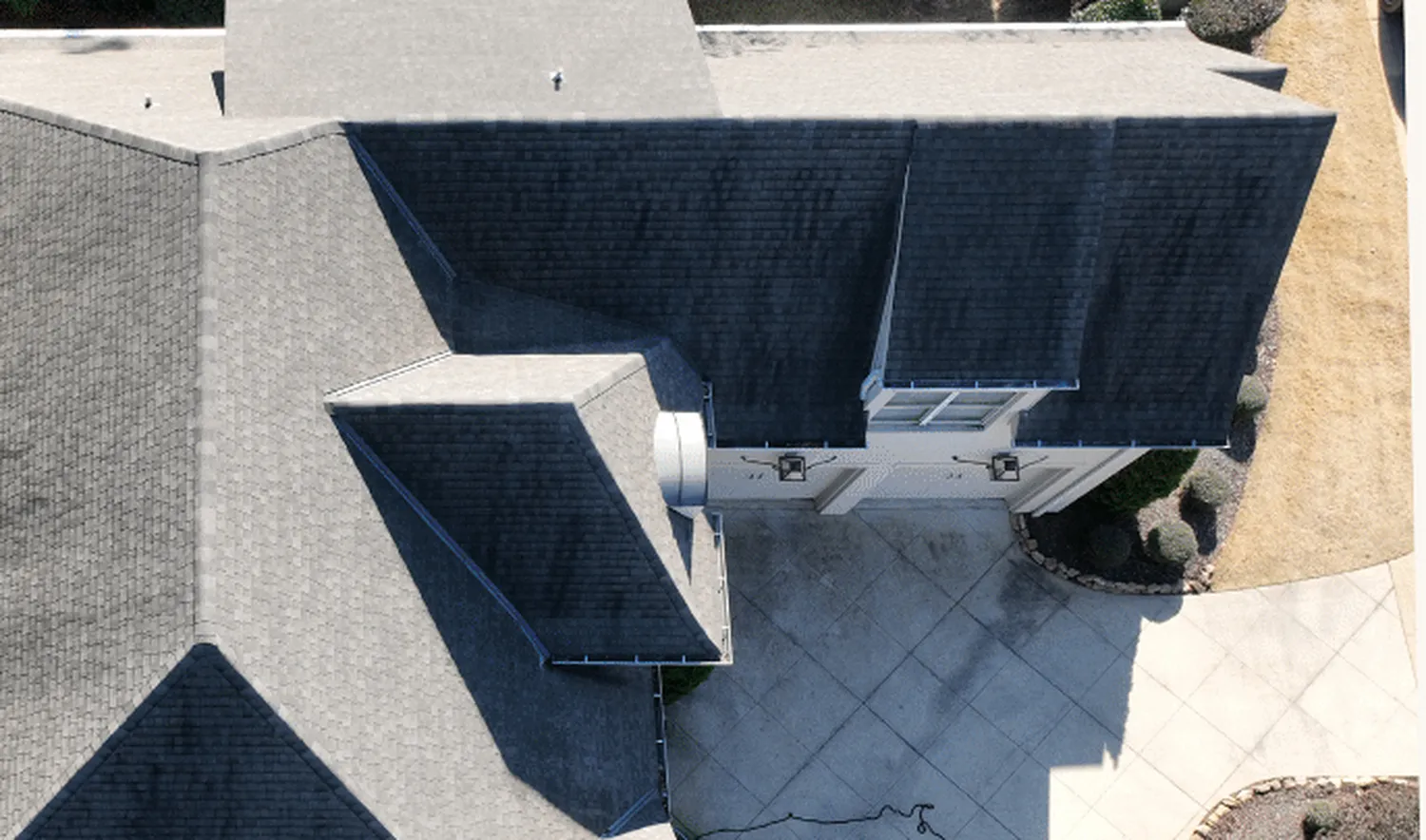
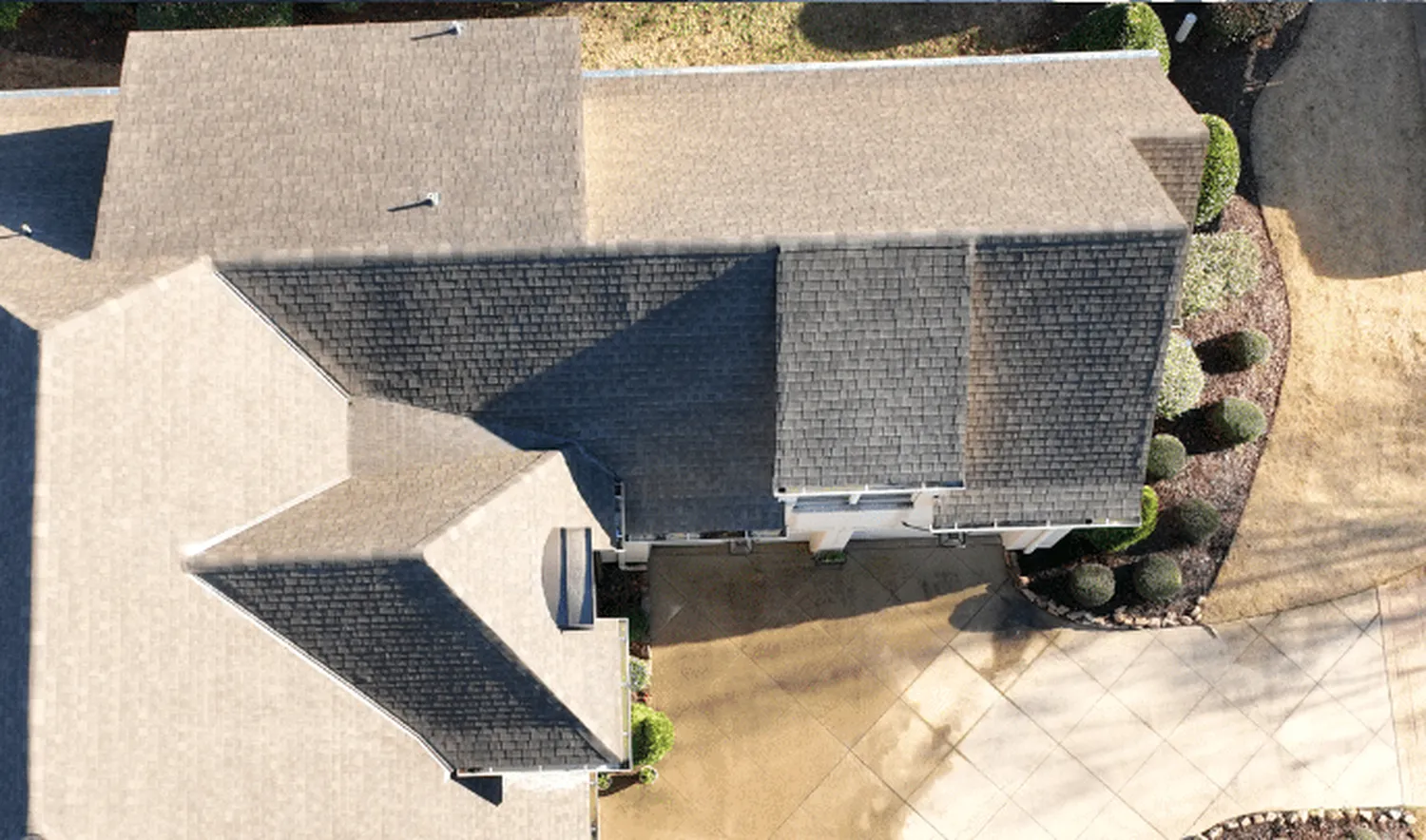 Tap to see after
Tap to see before
Tap to see after
Tap to see before
 Tap to see after
Tap to see before
Tap to see after
Tap to see before
 Tap to see after
Tap to see before
Tap to see after
Tap to see before
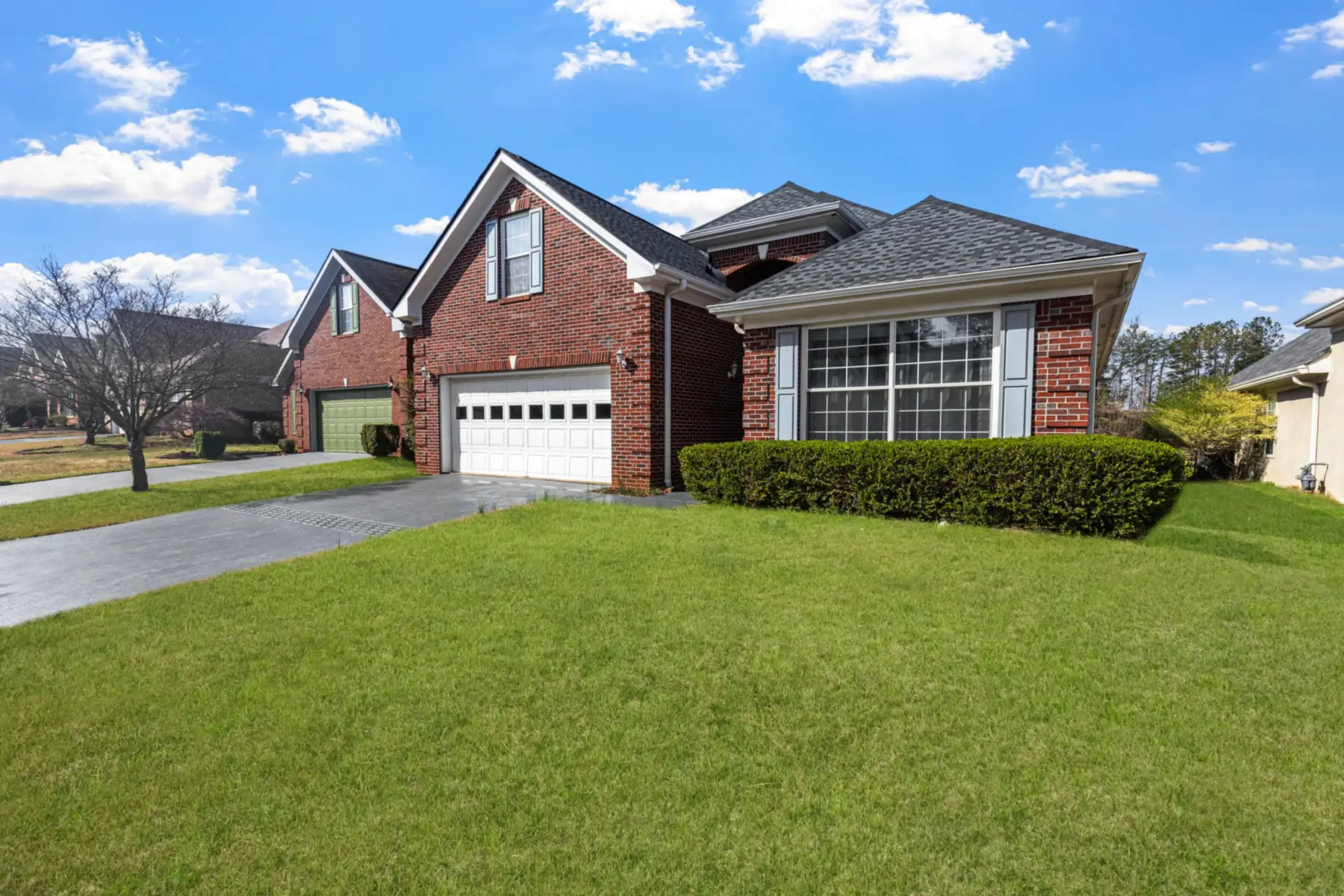
Every one of these is somebody's actual house.
Not a stock photograph, not a rendering, not a composite. These are the manufacturer’s completed jobs, shown with permission, because our own Texas work is only just beginning — and we would rather show you somebody else’s real roof than a stock photograph of nobody’s.
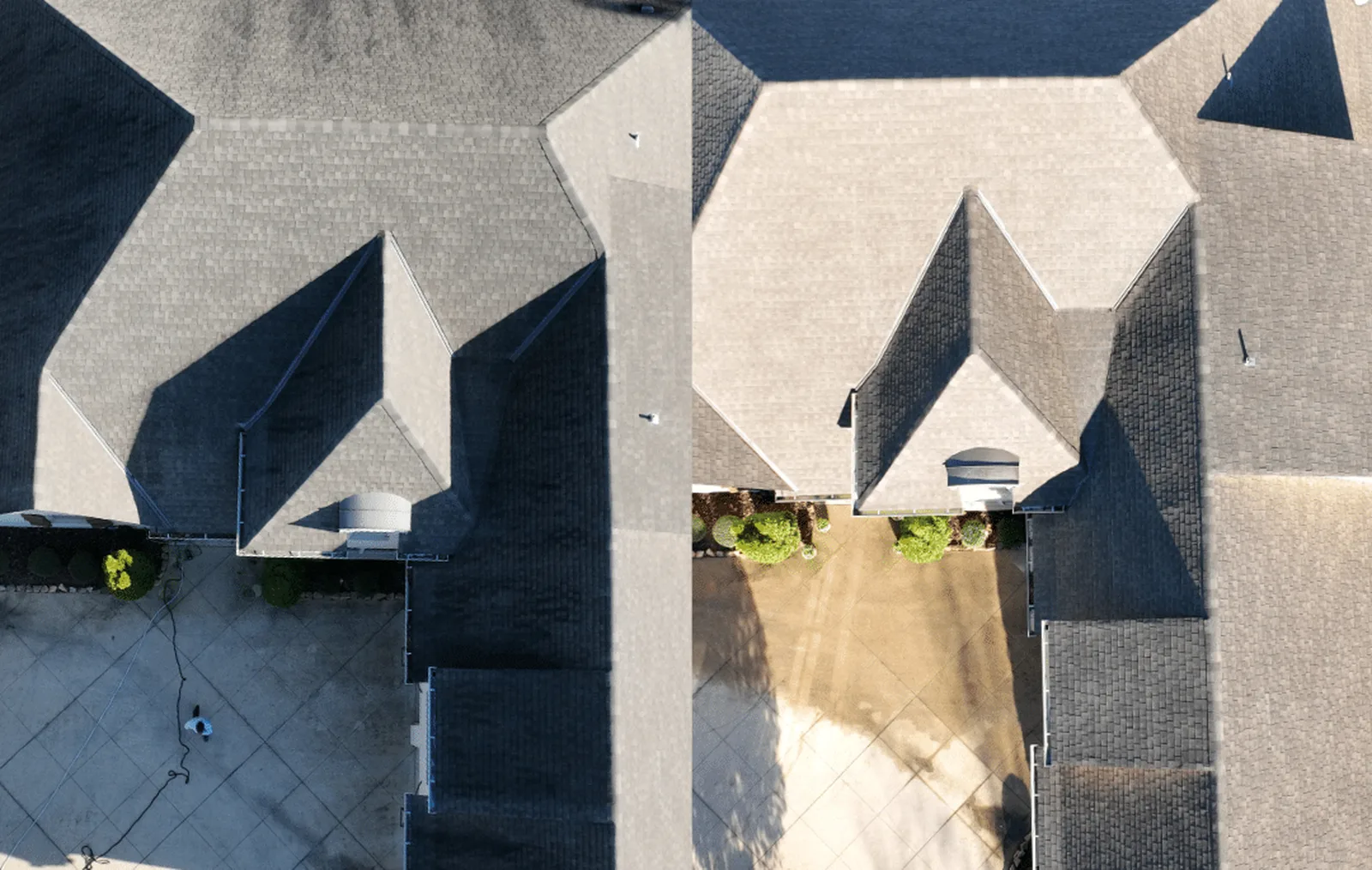
One frame, split down the middle
The most useful comparison in this business is the one where nothing changes except the roof. Left of the seam is untreated. Right of it is treated. Same aerial position, same light, same house.
What you are looking at is color depth and surface uniformity returning as the binder takes the treatment up. That is the honest description of the visual effect. It is not new shingles, and any granules already in your gutter are not coming back.
Photography supplied by Roofshield and used with permission.
What we actually do
We put the light fraction back into shingles that still have life in them.
A soy-based emulsion is sprayed across the roof at a controlled rate and absorbs into the shingle mat in roughly thirty to sixty minutes. It restores flexibility. It does not replace your roof, and where the mat is past saving we tell the owner to replace instead.
6 to 17 years old
The window where the chemistry does what the testing says it does. Younger and you are spending early; older and the mat is usually past saving.21
One to three hours
A typical single-family roof. Debris cleared and loose tabs sorted first, then full-coverage application. Walkable the same day.
A written report either way
Dated, photographed, slope by slope, with a plain treat-or-replace verdict. Yours to keep and to show any other contractor.
How a job runs
The complaint that comes up most often about this trade is not that the product fails. It is that it gets sold to roofs it was never going to help. So the honesty is front-loaded.
Roofshield's own job film — drone over a treated composite shingle roof, company vans in the drive. Rate control is not a detail: in the peer-reviewed work the heaviest application was “overly softened.”10
Inspection, and a written verdict
We get on the roof. Granule coverage measured, south and west slopes photographed, flashing and penetrations checked, decking assessed from inside where we can.
A yes or a no, in writing
If your roof is outside the window the report says so and gives the reason. We would rather lose the sale than take money for a treatment that will not do what we said in nine months' time.
Fixed price before we start
Our published rate is $1.50 per square foot of roof area. One number, the same for everybody. No “today only” pricing, no discount that appears when you say no.
Tune-up, then application
Debris cleared, loose fasteners and lifted tabs addressed first, because treating over a defect just seals in a defect. Then full-coverage application at the specified rate.
Photo record and warranty
Post-application walk, photographed and filed with your report. A written, transferable product warranty from the manufacturer, with its term and its exclusions stated on your quote before you sign anything. We will not describe it to you as longer or broader than the paperwork says it is.
One thing to get out of the way: this does nothing for your insurance.
Rejuvenation does not reset your roof's age, does not earn a discount and does not prevent a non-renewal. Carriers key on the installation date.3, 4 What it can do is keep a sound roof out of the “poor condition” column, which is underwritten separately.
The chemistry, and the evidence
A shingle does not wear out. It dries out — and then it stiffens.
Almost every roofing company will tell you a roof “gets old.” That is not an explanation. Here is the actual mechanism, from the standard reference on asphalt oxidation, and it is the reason a treatment can work at all.
A sound shingle
Granules are locked into the binder. Asphaltenes stay small and evenly dispersed, because there are still enough maltenes — the light fraction — to keep them apart and the whole mat flexible.
Oxidation
Ketones and sulfoxides form. Maltenes are converted into new asphaltenes, which agglomerate into larger and larger clusters. The binder stiffens. The rate roughly doubles for every 10°C hotter it runs.
Granule release
The asphalt-to-granule bond degrades and granules start letting go. Bare binder is exposed, more UV reaches it, and the whole process accelerates on itself.
Rejuvenation — and its limit
Putting the light fraction back re-disperses the agglomerates and restores flexibility to the mat. Note the gap that is still there: it cannot put back granules that have already gone.
Asphalt is a balance of two things
The binder is part asphaltenes — heavy, polar molecules that do the thickening — and part maltenes, the light fraction that keeps it fluid. “A proper balance in the amounts of the different chemical components is necessary to produce asphalt that is durable.”7
Sun and heat convert one into the other
Oxidation forms ketones and sulfoxides, which “cause the formation of increasing amounts of asphaltenes which form molecular agglomerates.”7 The maltene pool shrinks, the asphaltene pool grows, the binder stiffens.
The rate roughly doubles every 10°C
Asphalt oxidation follows Arrhenius kinetics.7 That is why a roof in Houston and a roof in Michigan do not age at the same speed, and why the south and west slopes of your own roof always fail first.
Then the granules start letting go
“Loss of volatiles can degrade the bond between the asphalt and the granules,” and “shingles become more brittle as volatiles, which keep them flexible, dissipate.”8
And that feeds back on itself
“Loss of granules increases the amount of UV radiation reaching the asphalt.”8 Bare binder oxidises faster, sheds more granules, exposes more binder. Past a point this runs away — which is exactly why timing matters more than anything else here.
What the testing actually showed — including the parts the industry leaves out
Provenance first, because it matters. The most-cited testing on soy-based shingle rejuvenation is a technical report authored at The Ohio State University and run in the lab by PRI Construction Materials Technologies — commissioned by the product manufacturer and funded by the Ohio Soybean Council. It carries OSU's own disclaimer that discussion of a product “does not constitute endorsement by The Ohio State University,” and it tested shingles from one 17-year-old roof.9 That does not make the measurements wrong. It does mean anyone citing it as “Ohio State proved it” is overstating what a single commissioned report on one roof can prove.
And one more thing you would find out anyway. That report was commissioned by a different manufacturer of a soy-methyl-ester rejuvenator, not by the maker of the product we apply. We cite it because it is the most substantial public testing that exists on this class of chemistry, and because the chemistry is the same — but it is not testing on our tin. Our own manufacturer has since supplied ASTM results for the product we apply, and we have set them out below — but they are manufacturer-supplied, not independent, and we weigh them accordingly. If that bothers you, it should count against us rather than for us.
Less granule loss
Average weight of displaced granules in brush testing fell 46% after treatment.9
The part they omit: at 1.27 g the treated shingles still failed the ≤1.0 g requirement for a new shingle.9, 14
Pliability, fail to pass
Bent weather-side-down, only 1 of 5 untreated 17-year-old specimens passed the ASTM D3462 pliability method. After treatment, 4 of 5 passed.9, 14
The strongest single result in the whole body of work — and it is a pass/fail, not a percentage. Anyone quoting “50% more flexible” invented that number.
New — testing on the product we actually apply
We finally have numbers on our own tin. Here they are, with the caveats attached.
Everything above this point is testing on a different manufacturer's soy-methyl-ester rejuvenator, because for a long time that was the only public testing that existed. Our manufacturer has since given us ASTM results for the product we apply, run on a fifteen-year-old shingle. We are printing them, and we are printing what is wrong with them.22
| Test | Untreated 15-yr | After treatment | New shingle |
|---|---|---|---|
| ASTM E-96 water-vapor transmission (perms) | 29.5 | 0.029 | 0.034 |
| ASTM D4977 granule adhesion (grams displaced) | 4.1 | 0.3 | 0.2 |
| ASTM D3462 pliability (percent passed) | 90% | 100% | 100% |
Manufacturer-supplied ASTM results for the product we apply.22 Not independently verified by us.
The cross-check that makes us take it seriously. The manufacturer's full table carries a fourth column for a competing product, and two of those figures — 3.31 perms and 1.27 g of displaced granule — are exactly the numbers in the Ohio State report we cite above.9 Somebody built this table against published data rather than inventing it, which is more than we expected to find.
And the part that does not reconcile. That same competitor column reports 95% pliability where the Ohio State report records 4 of 5 specimens passing — 80%, not 95% — and puts the untreated fifteen-year shingle at 90% where Ohio State recorded 1 of 5, or 20%.9 Those numbers do not add up, so treat the pliability row as the weakest line in the table until someone shows us the specimen counts behind it.
What we have asked for and have not got. The manufacturer's printed materials place an Intertek mark beside this table, which would mean an independent laboratory ran it. We have not seen that report, Intertek is named nowhere on the manufacturer's public site, and until the document is in our hands we will describe these as the manufacturer's own results and nothing more. If we get it, it goes on this page. If we never get it, that sentence stays on this page.
Peer-reviewed, 2025
The one paper that went through review — read carefully
A 2025 study from Iowa State University in the International Journal of Pavement Research and Technology treated 15+ year-aged 3-tab and architectural shingles with soybean-oil emulsions. It is the only peer-reviewed work in this field we have been able to find.10
What it supports: all treatments improved grit retention, and aged shingles treated with a 10 wt% soy methyl ester emulsion showed flexural modulus values comparable to new shingles.10
What it does not support: in that paper soy methyl ester was the control, and a semi-epoxidised soybean oil outperformed it on crack, hail and flame resistance. Anyone quoting this paper as proof that SME rejuvenation is peer-reviewed-superior has not read it.10
Why Texas is different
Heat is the variable that actually matters.
Asphalt oxidation follows Arrhenius kinetics — the rate roughly doubles for every 10°C hotter the surface runs.7 That is why a Texas roof and a Michigan roof do not age at the same speed, why the south and west slopes of your own roof always fail first, and why the treatment window opens earlier here than the national marketing suggests.
Storm exposure matters too, and Texas gets plenty of it — but storms are episodic. Heat is on your roof every single summer day, and it is the thing a treatment can actually address.
The underlying mechanism
Why a soy derivative can touch this at all
Separate open-access work from the same Iowa State group — on pavement, not roofing, and we will keep saying so — reports the chemical passivation of agglomerated asphaltenes using epoxidised vegetable oil derivatives, with epoxidised methyl soyate cutting asphaltene content by roughly 30% in aged extracts.11
That is the closest thing that exists to direct evidence that a soy derivative reverses the exact agglomeration mechanism described above. It is also the reason to be sober about the size of the claim.
The founding patent for this method — filed in 2000, granted 2002, now expired — claimed a single application extends a typical 20-year roof by about three years.12 The person with the most incentive to overstate it said three. Hold that next to the “adds 15 years” you will read elsewhere.
Pricing, in public
Nobody in this business publishes a price. We are going to.
Every competitor site we checked — the national franchise and every Texas independent — hides pricing behind “call for a free estimate.” There is no good reason for that other than wanting room to read the house before quoting the job.
Our rate is $1.50 per square foot of roof area. One number, published, the same for every homeowner. What changes from house to house is the roof area and whether the roof needs tune-up work before we treat it — and you get a fixed written number after the inspection, not a number that moves depending on the ZIP code or the car in the driveway.
About that “save up to 80%” number you have seen
That claim is built on a replacement figure of $20,000 to $30,000, which invites you to picture saving twenty-odd thousand dollars. Angi puts the average Houston roof replacement at $9,752, with asphalt shingle running about $4 to $6 per square foot.15 Against that average our $1.50 works out at roughly 68% less than replacing the roof, and on a real house the money you keep is about $5,650 to $8,800. That is a genuinely good outcome. It is also well short of the number the national pitch puts in your head, and you deserve to know which one you are being sold.
Why I do it this way
I told my own mother to replace her roof.
She lives in Pearland. Her roof was past saving — I looked at it myself — and there was no version of a treatment that was going to help her. So I told her to replace it, and she did.
That is the whole reason this page has a published price and a written report on it. If I will give that answer to my own mother, you can trust the answer I give you about your roof. About a third of the time, that answer is “replace it.”
— Tres Curtis, owner
What is included
- Full inspection and written condition report
- Debris clearing and minor tune-up
- Full-coverage application at the specified rate
- Post-application walk and photo record
- Written, transferable manufacturer warranty — term stated on your quote
What is not
- Structural repairs, decking or flashing work
- Replacement of failed shingle sections
- Gutter replacement
- Anything needing a different trade — we will name it and say plainly whether we can do it
The alternative, for scale
A tear-off is two days, a dumpster in the driveway and, at the Houston average, a little under $10,000 — more on a big or complicated roof. Every shingle on that roof becomes waste — the EPA estimated 13.5 million tons of asphalt shingle debris in the United States in 2015, roughly 94% of it from tear-offs.16 Rejuvenation does not make a tear-off unnecessary forever. On the right roof, at the right time, it makes it unnecessary this year, and the next few after that.
Estimator
Rough numbers, right now
Roof area works out to about 2,400 sq ft
Rejuvenation
$3,600
2,400 sq ft × $1.50
Replacement, same roof
$9,600 to $14,400
Money you keep, against the Houston average of $4.65 per square foot: $7,550
Estimate only. Replacement figures use Angi's Houston asphalt shingle range.15 A real number needs a real inspection.
Get the written numberIs your roof even a candidate?
This tool is built to disqualify you if you should be disqualified. A roof outside that window gets told to replace, not treat.
- Roughly 6 to 17 years old
- Mat sound, no delamination
- Granule coverage substantially intact
- No active leaks
- Decking, flashing and ventilation sound
- Active leaks — that is a flashing or decking job
- Granules substantially gone
- Widespread curling, cracking or missing tabs
- Generally beyond about 17 years
- Multiple layers, or a delaminating mat
The part nobody explains
Your roof loses insurance value on a calendar, not on a condition report.
Two houses, same street, same storm, same policy limit. One roof is five years old, one is twenty. The checks are not close, and the reason has nothing to do with how the roofs actually look.
The Texas Department of Insurance publishes this example itself: a $200,000 home, a 2% ($4,000) deductible, a $10,000 roof destroyed by a covered storm. Under replacement cost the policy pays $6,000 no matter how old the roof is. Under actual cash value, age eats the payout — and at twenty years it eats all of it.1
| Settlement basis | Value of the roof | Less deductible | Policy pays |
|---|---|---|---|
| Replacement cost | $10,000 | −$4,000 | $6,000 |
| Actual cash value — 5-year roof | $8,500 | −$4,000 | $4,500 |
| Actual cash value — 10-year roof | $7,000 | −$4,000 | $3,000 |
| Actual cash value — 20-year roof | $4,000 | −$4,000 | $0 |
Reproduced from the Texas Department of Insurance.1 We are a roofing contractor, not an insurance adviser. Read your own declarations page and ask your agent which basis applies to you.
“As roofs age, some companies will switch to actual cash value. And if your roof is in poor condition, your company might not cover your roof at all.” Texas Department of Insurance2
Fifteen years is a real line in Texas
One admitted Texas carrier's published guidelines list roofs older than 15 years as ineligible where windstorm is included — acceptable only “at Actual Cash Value subject to Underwriting approval.”5
Age can move your deductible too
One filed rate rule applies a 1% wind and hail deductible under 15 years and doubles it to 2% at 15, reverting only if the roof is replaced.4 On a $400,000 home that is $4,000 versus $8,000, every claim.
Condition is underwritten separately
The Texas FAIR Plan's manual names the defects that can cost a roof its replacement cost coverage: “curling, broken, blistered, damaged, or missing shingles; granular loss, nails popping out.”6
Interactive
What a roof payment schedule does to a claim
Roof payment schedules are real and some are publicly filed. The one modelled here pays composition shingles 100% at year zero and drops three points a year to a 25% floor.3
| Gross amount payable | $12,760 |
| Your deductible | −$8,000 |
| What a schedule like this pays | $4,760 |
| Left for you to fund | $17,240 |
| If you had full replacement cost | $14,000 |
Illustration only, using a real publicly filed schedule from another state as the model.3 Your policy may settle differently or use no schedule at all. Only your policy and your agent can tell you what you have.
What Texas law says a roofer may not do
Texas does not allow a roofing contractor to act as a public insurance adjuster on a claim where it is also doing the work — and, in TDI's own words, “you can't advertise that you would do so, either.” It is also illegal in Texas for a contractor to offer to waive, rebate or absorb a deductible.17
So: we do not file, negotiate, interpret or price your insurance claim, and we do not touch your deductible. What we can do is hand you a dated, photographed, written condition report. What you and your insurer do with it is entirely yours.
Multifamily & hospitality
For an owner, the disruption argument is bigger than the price argument.
Garden-style apartments, townhome-style buildings and two- and three-story exterior-corridor hotels built through the 1990s and 2000s all carry pitched composite shingle roofs. Those are the assets where this math works.
Read the numbers below as a model, not a quote. They are built from published per-square rates and stated geometry assumptions, not from anyone’s actual roof. Your real figures depend on measured roof area, access, pitch and condition, and we build that model on your own drawings before anything is signed.
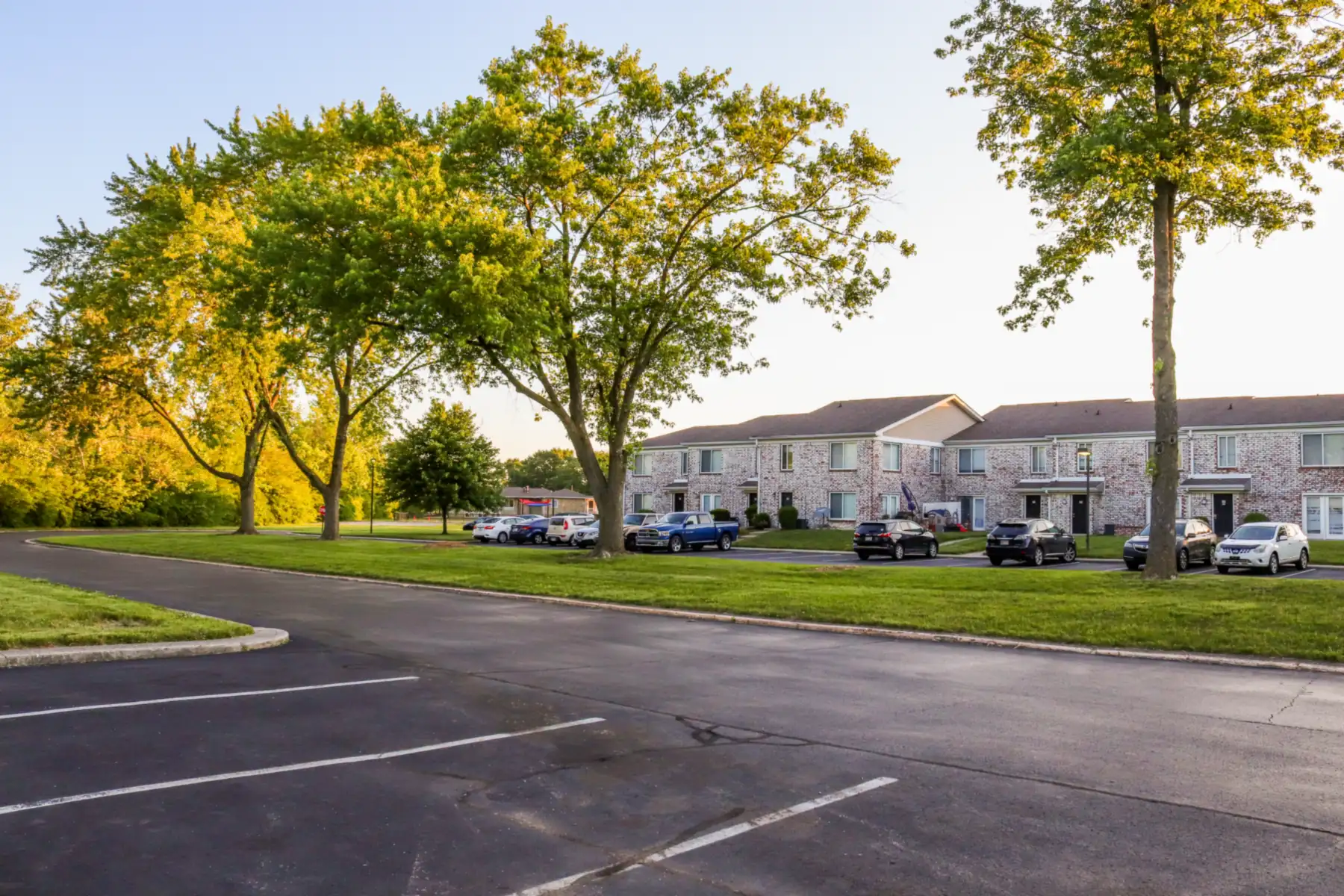
Garden-style multifamily
A 100-unit garden complex runs roughly 52,000 square feet of roof. Replacement at architectural shingle rates, plus two-story access and tear-off, lands around $210,000 to $340,000. Treatment at commercial volume — below our published residential rate, because the work is continuous — lands around $62,000 to $75,000, roughly a quarter.
Texas multifamily is sitting at high vacancy with soft rent growth. Class B and C owners cannot fund a quarter-million-dollar re-roof right now, which is precisely when deferring it stops being a nice-to-have. We will not put a number of years on that deferral in advance, because nobody in this category has published field data that would support one.
Model built from published per-square rates and stated geometry assumptions. We build the same model on your actual roof areas before you sign anything.
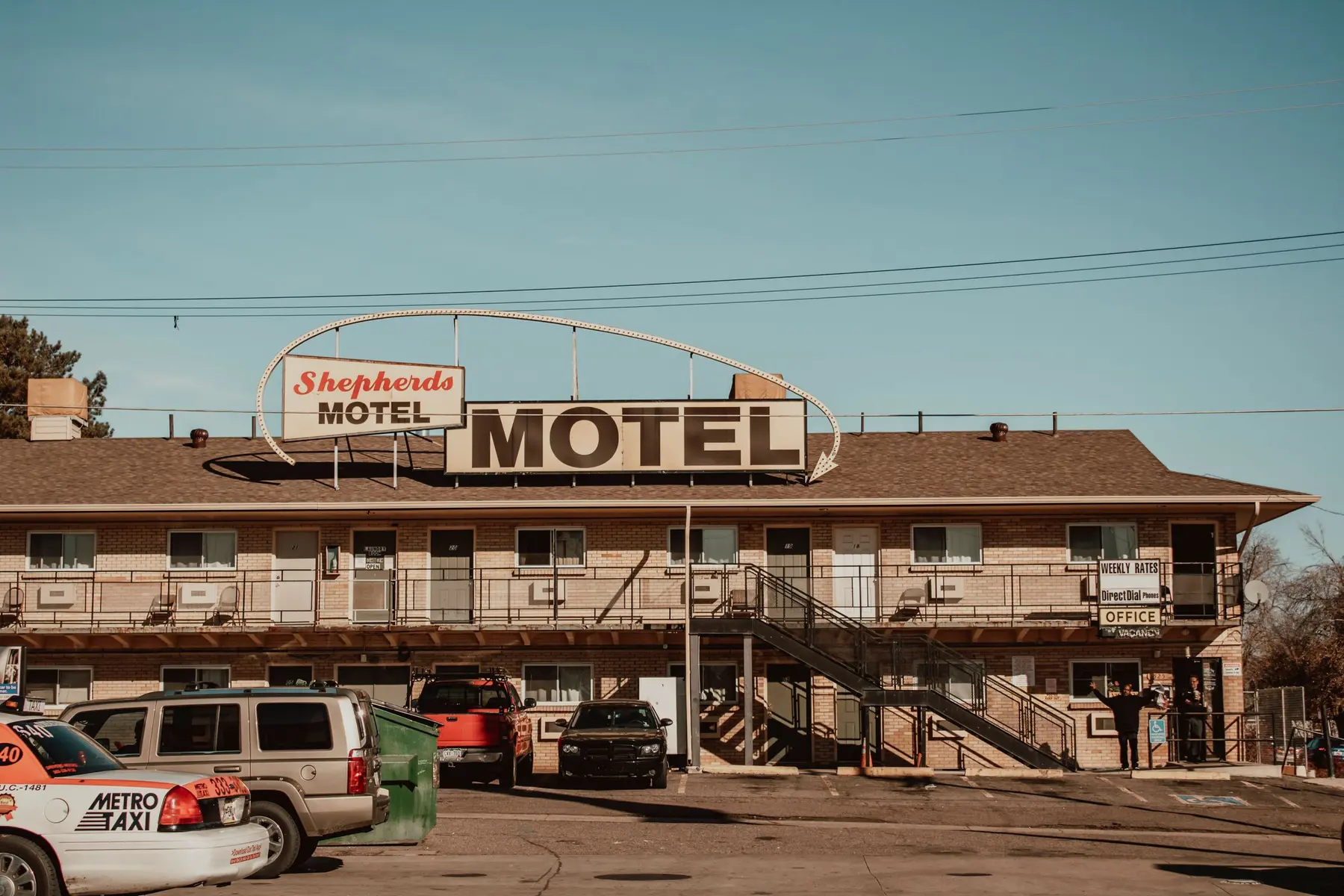
Select-service & exterior-corridor hotels
A 100-room exterior-corridor property is roughly 20,700 square feet of pitched roof: about $83,000 to $124,000 to replace, plus a phasing premium if you stay open. Treatment runs about $25,000 to $30,000.
Then add the line no replacement bid includes. Taking ten rooms offline for a week in season costs $10,500 to $21,000 in lost revenue at $150–$300 per room-night. A treatment is a one-to-three-hour job per building with no tear-off, no dumpster, no staging in the parking lot and no rooms out of inventory.
Most hotels of any scale have substantial low-slope sections. We tell you honestly which parts of your roof we can help with and which need a membrane trade.
The number your lender and your appraiser actually respond to
Roof condition moves valuation directly. At a 7% cap rate, every dollar of annual roof reserve reduces property value by $14.28. Missing inspection records force cap rate adjustments of 50 to 100 basis points — $100,000 to $200,000 on a mid-market asset. Properties rated RCR 3 or below typically trigger carrier requirements for replacement before a policy will bind, and two-thirds of owner-supplied roof ages understate actual service life by more than five years.20
Acquisition and refinance run on ASTM E2018 assessments with a quantified remaining useful life. A residential-style “fair condition” note does not survive underwriting. What does survive is dated, photographed, quantified condition data — which is the deliverable we produce on every job whether or not you buy the treatment.
Deferred CapEx
~$150k
modelled, on a 100-unit complex — replacement cost less the treatment cost
Rooms offline
Zero
no tear-off, no dumpster, no guest disruption
The page our competitors do not have
Everything we will not claim, and the strongest argument against us.
If you are going to hear this from someone, it should be from the company asking for your money. All of it is public. All of it is checkable.
“ARMA strongly advises against the application of any type of field-applied coating over installed asphalt shingles.” Asphalt Roofing Manufacturers Association13
That is the trade body for the companies that make your shingles, and its bulletin covers rejuvenators, not only coatings. Its stated concerns are shrinking coatings causing curling or cupping, non-permeable films trapping moisture, possible effects on fire classification and algae resistance, and “limited available documentation.”13
Our answer, and you can judge whether it is good enough. Most of ARMA's listed failure modes describe a surface film — something that sits on top, shrinks and cures into a layer. A penetrating maltene-replacement emulsion absorbs into the mat within roughly thirty to sixty minutes and leaves no film behind. That distinction is real. It is also not the same as ARMA endorsing rejuvenators, which it does not, and we will not pretend otherwise. ARMA also tells homeowners to check with their shingle manufacturer first — so should you, and if you are inside a manufacturer's non-prorated warranty period, that call matters more than anything we can tell you.
- “Restores your roof to like-new.” Treated shingles in the cited testing still failed the granule-adhesion spec for a new shingle.9
- “Adds 15 years.” No study measured service-life extension. The founding patent claimed about three years per application.12
- Any hail or impact rating. Treated and untreated both failed the Class 4 visual.9
- Any fire-performance benefit. The manufacturer's public claims and the commissioned lab report contradict each other on this. Until that is resolved we make no claim in either direction.9
- “Save 80%.” Against real Texas replacement pricing our rate is about 68% less, and the honest figure in dollars is roughly $5,650 to $8,800.15
- “Ohio State proved it.” OSU's own disclaimer says discussion of a product does not constitute endorsement.9
- Anything about your insurance. No carrier we can find recognizes rejuvenation. It does not reset roof age, earn a discount, or prevent a non-renewal.
- There is no long-term field study. These products date to roughly 2017–2019. The split-roof, treated-versus-untreated, twenty-year comparison has never been run by anyone.21
- No climate-specific data exists for intense UV or high moisture — which is to say, none specific to the Gulf Coast.21
- Effects on factory sealant strips over time have not been studied.21
- Manufacturers do not endorse it. GAF, Owens Corning and CertainTeed give no official position, and many warranties broadly prohibit unapproved topical applications.21
- Dose matters, and more is worse. In the peer-reviewed work, the heaviest application was “overly softened.”10 Application rate control is not a detail.
The ones people actually ask
Does this actually work, or is it a scam?
Will this reset my roof's age for insurance, or get me a discount?
How long does it last?
What does it cost?
Is it safe? What is actually in it?
Will it void my shingle manufacturer's warranty?
Will it stop my roof leaking?
Can it put my granules back?
Do you do commercial properties?
Are you licensed?
Free roof inspection
A written, photographed condition report. Yours to keep, whatever you decide.
No obligation, no “today only” price, and no sales visit disguised as an inspection. If your roof does not need us, the report says so and we leave.
What you get
Dated report with slope-by-slope photographs, granule coverage assessment, flashing and penetration notes, remaining-life estimate and a clear treat-or-replace verdict.
What we do not do
We do not file, negotiate or interpret insurance claims, and we do not waive or absorb deductibles. Texas law prohibits both for a contractor doing the work.17
How long it takes
Typically 30 to 45 minutes on site for a single-family home. The written report follows within one business day.
What it costs
Nothing. Including when the answer is “replace this, we cannot help you.”
Three questions to ask your insurance agent
- Is my roof settled at replacement cost or actual cash value?
- Is there a roof payment schedule on my policy, and what percentage applies at my roof's age?
- What is my wind and hail deductible, in dollars, not percent?
We cannot answer these for you — only your policy and your agent can. But you are entitled to ask, and as of January 1, 2026 Texas law also entitles you to a written explanation if a policy is declined, cancelled or non-renewed.18
Texas does not license roofers. At all.
The Roofing Contractors Association of Texas says it outright: the Texas Department of Licensing and Regulation “does NOT currently administer licensure for roofing contractors,” and RCAT built a voluntary certification precisely because “anyone can operate as a roofer in Texas without credentials.”19 No state exam, no state bond, no state complaint board. Ask every contractor who knocks on your door for general liability limits and workers’ compensation status in writing. Including us.
Montgomery · Harris · Fort Bend · Brazoria · Galveston
Where we work
Not on the list? Call and ask. We work the Houston region and the communities south of it, because that is what one person and a truck can service properly. If you are further out, call and ask — we would rather tell you no than take the job and do it badly.
Book the inspection
Or just call (713) 553-3225 and talk to Tres.